Monday, January 28, 2008

The Tofa People


Tofalaria - The Land of the Tofa People


The Tofa are an ancient minority people living across from the northern-most parts of Mongolia between Tuva and Buryatia. Numbering only a few hundred now, the Tofa as a people might become obsolete within the next decade according to some scholars. Their language in now spoken only by a few dozen elderly Tofa and will most likely die out with them. The ancient Tofa traditions of herding reindeer and hunting for food and hides is part of a way of life that has reached the end of its road in a final meeting with modernity.


Tofa Hunter, photo by Vladimir Sorin
Photo courtesy: Cultural Survival Quarterly

Wednesday, December 19, 2007

' Kiran Over Mongolia ' - New York City Screening December 22nd, 2007


'Kiran Over Mongolia' Screening December 22nd, 2007

Scandinavia House will present a screening of 'Kiran Over Mongolia' on December 22nd 2007 at 5:30 pm.

Director Joseph Spaid will introduce his film which has been garnered much praise in its showings around the world.

There will also be a live bird of prey demonstration along with a Kazakh folk instrument performance.

'Kiran Over Mongolia' website: www.kiranovermongolia.com/

The event location is Scandinavia House, 58 Park Avenue at 37th Street.

Sunday, September 30, 2007

Mongolian Film 'Khadak' Opening in New York City, October 12th, 2007


Khadak

An important upcoming Mongolian cultural event this fall is the opening of the award winning Mongolian film KHADAK in New York City on Oct. 12th, Chicago on Oct. 19th, Seattle on Nov. 2, and San Francisco on Nov. 9th, with more dates to follow. See below for synopsis and info, more available at www.khadak.com

Set in the frozen steppes of Mongolia, KHADAK is a magical-realist fable, which tells the epic story of Bagi (Batzul Khayankhyarvaa,) a young nomad shepherd who confronts his destiny to become a shaman. After a plague strikes their herd, Bagi and his family are relocated to a mining town. There, he saves the life of Zolzaya (Tsetsegee Byamba,) a beautiful performer/coal thief. When Bagi discovers that the plague was a government lie fabricated to eradicate nomadic life, he and Zolzaya incite a revolution. Bagi's shaman powers help rally his people, but will they ever be able to return to their former lives?

Documentarian Peter Brosens is known for his internationally acclaimed Mongolia trilogy (CITY OF THE STEPPES, STATE OF DOGS, and POETS OF MONGOLIA), which screened at over 100 festivals including Venice and Toronto. Also trained in documentary filmmaking, Jessica Woodworth’s first film, URGA SONG, was shot in Mongolia. It was followed by Morocco-shot THE VIRGIN DIARIES, which was nominated for the FIPRESCI Award by the International Documentary Film Association. KHADAK is their first feature film.

“Brosens and Woodworth have a directorial touch to match the ravishing landscapes and flinty people. It's part political thriller, part social document.”
Time Magazine

Saturday, September 15, 2007

The Historical Role of Women in Mongolian Society and Culture


Cover Photo from 1980' Pamphlet titled, "Women of The Socialist Mongolia"


The role of Mongolian women in Mongolian society and culture has been prominent in large part due to the need for sharing the Mongolian nomadic life style's strenuous herding and household workloads in an extreme climate. Mongolian women have been known historically for their physical strength, bravery, and devotion to family.

From the earliest Mongolian history available to us we can see the deep bond between Mongolian women and their children. In the most important Mongolian historical account available to us, 'The Secret History of the Mongols' written in the thirteenth century, we can read of numerous episodes in the life of Chigghis Khan and his family where the actions of his mother and wife were pivotal to his life and those of his descendants.

Chinggis Khan's deep love and respect for his wife Borte is depicted through the telling of several historical passages in 'The Secret History of the Mongols'. We see the powerful influence of Khubilai Khan's mother in his development and eventual rise to power and rule over all China.

During the period when Mongolia was under Soviet influence, Mongolian women had good access to education and training in many fields including areas which were the traditional sphere's of male dominance. Mongolian women today are prominent in many fields including,science, government, education, international relations, and business.

Thursday, September 13, 2007

Ulaan Baatar, Mongolia


Closer View of Ulaan Baatar


Distant View of Ulaan Baatar


Ulaan Baatar, Mongolia's capital city has existed in name since 1639. Originally Ulaan Baatar meaning 'Red Hero' was located at the monastry of Da Khuree about 421km from modern-day Ulaan Baatar. This nomadic national capital has been moved from several locations more than a dozen times. Today more than a million people live in Ulaan Baatar, Mongolia's largest city.

Wednesday, September 5, 2007

Mongolian Traditional Cultural Themes in Mongolia Today


Billboard for Mongolian Historical Opera in Ulaan Baatar, Mongolia


Mongolian traditional culture has evolved and adapted to modern audiences in Mongolia by appealing to Mongolian people's interest in historical dramas which have the universal themes of love stories, heroes, heroines, and windswept landscapes.

The success of these historical period dramas on Mongolian television, on stage, in film and even opera conveys the lasting power of ancient traditional symbols and historical characters. Mongolian culture has thus far managed to combine some of the old cultural themes for modern Mongolians, thus preserving what is classical form and presenting it through very modern production media and methods.

Time will tell if these ancient themes will be able to attract the young Mongolian audiences which comprise the majority of Mongolia's population.

Sunday, September 2, 2007

Sun and Clouds, Hovsgol Aimag


Sun and Clouds, Hovsgol Aimag

Rain Clouds in Hovsgol Aimag


Rain Clouds in Hovsgol Aimag

Mongolian Horses


Mongolian Horses in Hovsgol Aimag

Tuesday, July 24, 2007

" Mongolia: Dance, Music and Ballad " at Asia Society, New York City


" Mongolia: Dance, Music and Ballad " at Asia Society, New York City

Tuesday, July 24, 2007, 10AM to 3PM
Asia Society
725 Park Avenue (at East 70 Street), NYC

Explore Mongolian culture and epics, experience traditional Mongolian music and dance with artists and scholars from Inner Mongolia. The rhythms and notes dance across lutes, flutes, fiddles and the two-string horse-head violin (morin khuur)—considered Mongolia’s national instrument. Dancers offer the indigenous bielgee while singers share epic songs (tuul’), long chants (urtyn duu) and overtone singing (khoomii). Featuring Morris Rossabi, Alain Desjacques, Josephine Markovits and the musicians and dancers from Inner Mongolia. Presented in conjunction with Lincoln Center Festival 2007 www.LincolnCenter.org.

Wednesday, June 27, 2007

Mongolian Wrestling


Damdin Danigai – 1921 Mongolian National Naadam Champion.
Number 1 out of 96 contenders.


G. Bat-Ochir – 1921 Mongolian National Naadam Runner-Up


Vandan Titan – 1922 and 1923 Mongolian National Naadam Wrestling Champion
Number 1 out of 704 contenders.
Wrestled 16 times in Mongolian National Naadam and 50 times won provincial Naadams.


Bosaw Shagdir - 1924 Mongolian National Naadam Wrestling Champion
Number 1 out of 674 contenders.


Jamiyan - 1926 Mongolian National Naadam Wrestling Champion
Number 1 out of 960 contenders
Main technique was charging leg grab and throw.


Jamiyan - 1927 Mongolian National Naadam Wrestling Champion
Number 1 out of 960 contenders


Ayoor - 1929 Mongolian National Naadam Wrestling Champion
Number 1 out of 1000 contenders


B. Banzar - 1929 Mongolian National Naadam Wrestling Champion
Number 1 out of 1000 contenders


Lhagva - 1931 Mongolian National Naadam Champion - Number 1 out of 1000 contenders


Wrestler At Naadam, Hovsgol Aimag, July 1996
by Robert McCracken Peck


Mongolian Wrestlers at the Festival of Mongolia in Central Park,
New York City, 2000

Mongolian wrestlers and archers are generally regarded by Mongolians as holding a very important cultural status in traditional Mongolian society. The wrestlers especially are thought of as embodying ancient values of nobility, strength and chivalrous sportsmanship. The rituals of Mongolian wrestling competition are believed to have been passed down in a form virtually unchanged for hundreds of years.

Mongolian wrestling is one of the three main sports of the Mongolian 'Naadam' celebration, the other two are archery and horse racing. Naadam comes from the word "Naadakh' which means to have fun. The Naadam events take place outdoors over three days between July 11th thru 13th every year. Naadam is the grand annual celebration of Mongolian traditional sports and culture during which most offices are closed since the nation as a whole is on holiday. Usually 512 wrestlers enter the Naadam competition and final eliminations are decided after nine rounds. The wrestlers with the most victories and highest title decides who his opponents will be after the third round of eliminations.

The traditional Mongolian wrestling costume consists of a red waistcoat open in the front called a 'Zodog', blue wrestling trunks called 'Shuudag' and high boots called 'Gutuls'. One of the most unique aspects of Mongolian wrestling is there are no separate weight classes and there are no time limits for the wrestling bouts. During the wrestling match if either wrestler's knee or elbow touches the ground then he loses the match.

Each wrestler has a "Zazul" who is both his coach and herald. At the beginning of the third, fifth and seventh rounds he sings the praises of his wrestler's heroic deeds. During lulls in the match the Zazul slaps the wrestler on the back and exhorts them to struggle on. Before and after the match, each wrestler does the traditional "Eagle Dance" (Devekh) which symbolizes power, bravery, grace and invincibility and is based on the flight of the mythical Garuda bird. These ancient Mongolian wrestling rituals are very important vestigial elements of Mongolian culture. The pre-wrestling rituals combine mystical and heroic imagery as well as mythical symbolism and meaning which are primary parts of Mongolia's rich history and culture.

The wrestlers slap their thighs to show they are ready to begin the match. Mongolian wrestlers have a vast range of techniques called 'Mekhs' which they utilize based on their assesment of each opponents strengths or weaknesses. A highly skilled Mongolian wrestler can know hundreds of Mekhs. If a wrestler loses the match, he then symbolically passes under the arm of the winner as a sign of respect.

The power and ability of Mongolian wrestlers is world renowned and currently making its powerful impact felt on the world of Japanese Sumo. A handful of Mongolian wrestlers have mastered Japanese Sumo techniques and now dominate the hierarchy of Japanese Sumo. The Mongolian Sumo wrestlers have had great success in Japanese Sumo by adapting traditional Mongolian wrestling methods, training and inherent strengths for the suddenly changed world of Japanese Sumo.

The Mongolian wrestling ranking hierarchy starts with the title of Falcon (Nachin), then Elephant (Zaan), then Lion (Arslan), and then the highest rank which is Titan (Avarga).

Mongolian Wrestling Terminology

Bukh - the word for Mongolian wrestling or wrestler.

Mekh - A technique or ruse to catch opponents off guard.

Tahina Uguh - To go under the winner's arm after a loss.

Monday, June 4, 2007

Mongolia most famous painting 'One Day in Mongolia' by B. Sharav


'One Day in Mongolia' by B. Sharav

The most famous Mongolian painting is 'One Day in Mongolia' by the great painter, B. Sharav who lived from 1869 to 1939. This masterpiece of Mongolian art depicts a grand overview of the timeless traditions of the day-to-day life of Mongolian people.

Close scrutiny of sections of this grand painting illuminates many different aspects of Mongolian nomadic life including the various stages of felt making, erecting a Ger, and religous rituals. This painting by B. Sharav shows Mongolian pastoral nomadic life as a robust colorful existance with great liveliness shown through its many fine details.

Friday, March 23, 2007

Mongolia Culture Website


Mongolian Culture Website: www.Mongolianculture.com

Source: http://www.leeds.ac.uk/library/subjects/arts/eastasia/websites-mongolia.php

Mongolian Culture
http://www.mongolianculture.com/

From the Leeds University Library Webpage

Mongolian Culture, an online resource from the New York based Indo-Mongolian Society, aims to introduce its users to contemporary Mongolian culture, recommend wider online and print resources, and to provide information on the society's activities. The main page contains several photographic images of Mongolian life and culture, along with links to a map of Mongolia, and texts on Mongolian law, culture, art and history. From this page, users can also navigate to lists of online and print resources on Mongolia. Print resources are classified by essential and recommended reading, and there is also an online excerpt from a translation of The Secret History of the Mongols. Users will also find a long list of online resources on Mongolian history, including images, articles and reading lists. Other collections of alternative gateways cover: news; culture; and art.
The website also features its own textual introduction to Mongolian culture, and provides more extended information on a number of topics, including: films about Mongolia; Mongolian dance; the horse in Mongolian culture; and Mongolian storytelling. The website reproduces five papers given by speakers at the Indo-Mongolia Society. In addition, users will find summaries and textual information on the Indo-Mongolia Society's recent and future activities.

Tuesday, March 20, 2007

Mongolian History


Ilkhanid Mongol Court Scene
Mongolia History

Mongolia History Blog

We have added a Mongolian history blog to our main webpage: www.Mongolianculture.com
The Mongolia History blog titled 'Mongolia History' is found here at: http://mongoliahistory.blogspot.com/

Scholarly articles on Mongolian history along with historical images will be presented to provide a range of knowledge about Mongolia, Mongol people and related topics.

Sunday, March 18, 2007

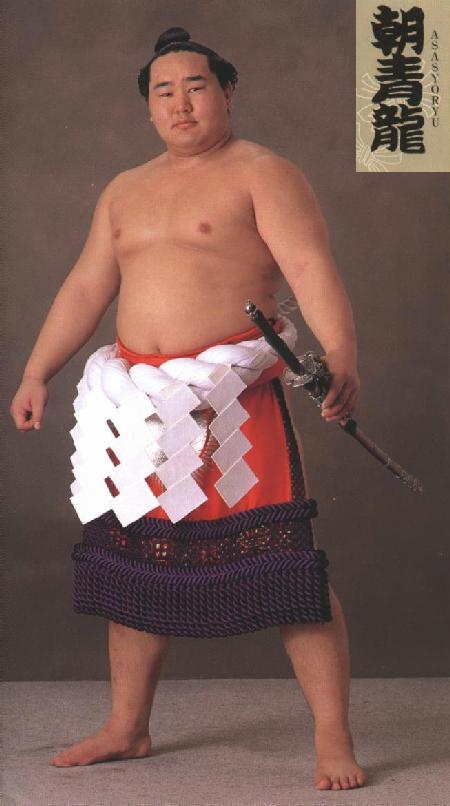
Asashoryu Victory March 16th, 2007 in Osaka

Asashoryu Victory March 16th, 2007 in Osaka
href="https://blogger.googleusercontent.com/img/b/R29vZ2xl/AVvXsEg6jVMvnqLtP_v2VvvKo4zsOsWUqDsU_FJk3F-onnNDXVgCCRKWPCBZBfkyOoqZGeGRECfUpajC6aqjvVTvDfASZriTmB92YLaWq8T4f2clkXJNEvh48SWxghZzGpVsVowQfsMY6XKqh7k/s1600-h/asashoryuMarch16.jpg">
Sumo's grand champion Asashoryu manhandles fellow Mongolian Kyokutenho and sends him backward into the dirt during their bout in the Spring Grand Sumo Tournament at Osaka, western Japan, on Friday. Asashoryu, who's seeking his 21st career victory, now stands at 4-2 after Friday's final bout. Kyokutenho dropped to 1-5. (AP Photo/Kyodo News)
(March 16, 2007)
Source: http://www.Seattlepi.com

Sunday, March 11, 2007

Mongolian Greatest Rock Band plays Brooklyn, New York


The Legendary Mongolian Rock Band 'Hurd'

Mongolia's greatest rock band 'Hurd' played Brooklyn, New York on March 9th, 2007 to a large audience of Mongolian rock fans. Hurd presented a strong show of Mongolian favorites that appealed to all the generations of Mongolians present for this special event including some Mongolian teeny boppers. The jovial Mongolian crowd sang along and danced till the very last song and left hoping for Hurd's return to New York once again.

Mongolian Tsagaan Tsar Celebration in New York City


Mongolian Ger at Tsagaan Tsar in New York City

A Mongolian Tsagaan Tsar celebration was held at the Rubin Museum of Art in New York City on February 3rd and 4th, 2007. The RMA events for Tsagaan Tsar including presentations of Mongolian throat singing, Tsam masked dancing, and workshops on Mongolian jewelry making and mask making. A showing of the Mongolian film 'The Weeping Camel' was included as part of two-day celebration of Mongolian culture.

Tuesday, January 23, 2007

Cave of the Yellow Dog


Cave of the Yellow Dog

Cast: Urjindorj Batchuluun, Batbayar Batchuluun, Nansal Batchuluun

New film by Mongolian director Byambasuren Davaa titled "Cave of the Yellow Dog" tells the story of a young Mongolian girl's adoption of a wild dog. This film is a combination of documentary style and scripted feature film making with an intense appreciation of the Mongolian pastoral nomad way of life. The threat of predatory wolves, at-risk sheep and a Mongolian child's emotional attachment to her favourite animal combine to create a strong tale of life on the edge in the Mongolian countryside.

Sunday, January 21, 2007

Mongolia - Young Scientist of the Year


Source: Ollo Mongolian News & Information Leader Portal Website
http://www.olloo.mn/en/index.php

President N.Enkhbayar awarded Young Scientist of Year of 2006 to Dr. Ulambayaryn Erdenebat, scientific officer of Archeological Institute, Academy of Science.

The diploma presented to the Young Scientist of Year excerpts from traditional proverb:
“A knowledgeable person shines by his creation
A precious stone shines by its color.”

In addition the diploma notes “You U.Erdenebat discovered the historical artifacts of ancient time and medieval period by archeological studies during the year of the 800th anniversary of the establishment of Great Mongolian State and wrote series of scientific works based on the artifacts.

I President of Mongolia highly value your contribution for studying, preserving and advertising abroad the historical and cultural artifacts of Mongolia and express my gratitude for your highly intellectual benefaction for the country and the people and bestow you the award named after the President of Mongolia.

May your future scientific work and creation be highly beneficial for the state and people and be well known for the world.

The Young Scientist of Year award named after the President of Mongolia consists of title, personal diploma and cash award of one million tugrugs and is sponsored by Anod Bank and Mongolia’s Foundation for Science and Technology.

Friday, January 12, 2007

Mongolia Country and History Information Summary


Map of Mongolia by the University of Texas

Country name: Mongolia (Local short form: Mongol Ulus, formerly known as Mongolian Peoples Republic and until 1924 was called Outer Mongolia).

Capital: Ulaanbaatar (means Red Hero) population 904,000 people (2006). Situated on the Tuul River. From 1639-1706 was known as Urga or Da Khuree.

Size: 604,826 square miles (1,566,00 square km)

Area comparison: Four times the size of U.K., Three times the size of France, or about the size of western Europe. Mongolia is the world’s largest landlocked nation and is the 18th largest country in the world.

Location: Northern Asia, situated between the People’s Republic of China and the Russian Federation.

Population: 2.8 million (2006) More than half the population is under age 30.

Population Density: 4.7 persons per square mile (1.7 persons per square km) Approximately 65% of Mongolians live in urban centers, 35% are pastoral nomads.

Languages: Khalkh Mongolian (90%), Turkic, Russian. Cyrillic script is used in writing.

Literacy Rate: 98.4%

Religions: Mahayana Tibetan Buddhism (96%), Shamanism,

Government: Parliamentary Democracy

Mongolia has 21 Aimags (provinces) which are divided into 343 Sums (districts) and smaller areas known as Baags.

Climate: Extreme Continental (large daily and seasonal temperature changes)
Summer averages +68F degrees. Winter averages –13F degrees. Winter season runs from October till April. Annually Mongolia has more than 260 sunny days on average.

Average Elevation: More than 5,180 feet (1,580 meters) Average altitude in Mongolia is one mile above sea level.

Major Rivers & Lakes: The Orkhon River is the longest river in Mongolia at 698 miles (1124 km). Lake Hovsgol Nuur is Mongolia’s largest lake and holds 2% of the world’s freshwater supply.

Terrain: Desert steppe, Desert plains, Grassy steppe terrain is found in most parts of Eastern Mongolia, Mountainous zone covers 5% of Mongolia’s territory, Mountain forest, Taiga forest region in the north is 5% of Mongolia’s total landmass.

The Gobi Desert is the world’s northernmost desert and has a mostly gravel surface with low-lying rocky hills. One of the earth’s great deserts it ranges through most of southern Mongolia and comprises 17% of Mongolia’s total landmass. Annually desertification in the Gobi Desert is increasing due to overgrazing primarily.

Mountain Ranges: Altai Nuruu Mountains ranging northwest to southeast, Khentii Nuruu Mountains in the northeast and Khangai Nuruu Mountains in Central Mongolia.

Highest peak: Khuiten Peak14,350 feet (4374 meters) in the Altai Tavanbogd Uuul range.

Currency: Tögrög (Tughruk), U.S. $1 = Tg1165 (January, 2007)

Main Exports: Copper, Textiles, Cashmere and cashmere products, Fluorspar, Wool, Livestock and livestock products.

Public Holidays: New Years Day - January 1st, Tsagaan Tsar (Lunar New Year) – Usually early February depending on phases of the moon, International Woman’s Day – March 8th, Mothers and Children’s Day - June 1st, Naadam (National Games) – July 11th - 13th, Independence Day – November 26th,


Brief History of Mongolia

In the 13th century Mongolian epic chronicle of history titled ‘The Secret History of the Mongols’ the story of the Mongol people’s origins begins like this:

“There came into the world a blue-gray wolf
Whose destiny was Heaven’s will.
His wife was a fallow deer.
They traveled across the inland sea
And when they camped near the source of the Onan River
In sight of Mount Burkhan Khaldun
Their first son was born, named Batachikhan.” 1

Mongolia is an independent nation that rose during the reign of Chinggis Khan (Genghis Khan) who founded the Mongol nation in 1206. Chinggis Khan was born into Mongol tribal nobility in approximately 1162; his given name was Temujin. When Temujin was nine years old his father Yesugei Khan, was poisoned by tribal enemies. Temujin went on to survive abandonment by his clansmen, near starvation, capture by enemies, war wounds and the kidnapping of his wife Borte. Temujin was able to rescue Borte and later attracted a band of followers from many different tribes who saw in him signs of a visionary leader destined for greatness.

Temujin fought and overcame the Dorbets, Tartars, Seljuits, Tonkaits, Merkits, Keraits, Naimans, and other Turkic and Mongol tribes in Mongolia as his power grew. After these successful campaigns he was formally recognized as the supreme leader of the tribes of Mongolia in 1206, and given the title of Chinggis Khan, which means ‘Universal Ruler’.

He then proceeded to conquer the Central Asian kingdom of the Khwaramshah, defeat all the tribes of northern China by 1225 and laid the foundations for the birth of the massive Mongol Empire. Before Chinggis Khan died in 1227 he chose his son Ogodei as successor and advised his sons to expand the empire, recognize Ogodei in writing and to serve each other for the sake of unified strength.2

Today Chinggis Khan is recognized by many as a military and political genius3 without parallel whose empire endured for generations while in comparison Alexander the Great’s empire crumbled as he died.4

The Mongol Empire at its greatest extent spanned most of Asia with its dominions reaching from Korea to Hungary and down to the Indus. The Mongol Empire Khans and their generals defeated the armies that controlled the territories of the nations we know of today as China, North and South Korea, Myanmar, Iran, Iraq, Syria, Turkmenistan, Kazakhstan, Uzbekistan, Kyrgystan, Tajikistan, Georgia, Azerbaijan, Armenia, Afghanistan, northern India, Hungary, Transylvania, Bulgaria, eastern Germany, Russia, Ukraine, Poland and others.

The lands that make up modern day Russia, Ukraine and Kazakhstan were conquered and ruled by the Mongol Empire’s Golden Horde Dynasty from 1237 until 1382. The Golden Horde’s rule endured in Kazan and Astrakhan till 1554 and lasted in Crimea until 1783. Some historians5 have reasoned that the Mongol Golden Horde Dynasty helped the Russian princely states and Muscovy’s development as a regional power, which ultimately led to the creation of czarist Russia and its consolidation of Central Asia.

After conquering China’s Northern and Southern Sung kingdoms, Mongolian Emperors unified and ruled China during the Yuan Dynasty from 1271 till 1368. A Han Chinese peasant leader named Zhu Yuanzhang forced the Mongol Yuan to leave China and became the first Ming Dynasty king in 1368. Warfare between the western Oirod Mongols and the eastern Khalkh Mongols from 1400 to 1454 led to an extended tumultuous division between the Mongols. Esen Khan the Oirod Mongol chief reunited the Mongol tribes and captured the Chinese Ming Emperor Yingzong in 1449. In 1552 the Mongol prince Altan Khan defeated the Oirod and reunited Mongolia. Mongolians largely adopted Tibetan Buddhism during Altan Khan’s reign, 1543-1583.

The Ming Dynasty was gradually weakened by its long wars with the Mongols, internal conflicts, powerful court eunuchs, corruption and other regional campaigns. In 1644 the reign of the last Ming king Ch’ung-Chen (1628-1644) was doomed by yet another large scale peasant uprising rebellion. At that very moment a nomadic tribe called the Jurchen or Manchu swept into northern China, seized the imperial throne and claimed the ‘mandate of heaven’ as their divine right to rule China.

During the Manchu tribe’s Qing Dynasty in China (1644 – 1911) Mongolia was split into Inner Mongolia and Outer Mongolia and was administered by Manchu rulers. Outer Mongolia declared independence in 1911 after the Manchu government in China finally collapsed.

With Russian assistance Mongolia was able to expel Chinese troops trying to reassert Chinese rule in Mongolia in 1921. From 1924 till 1990 Mongolia was known as the Mongolian Peoples Republic and was governed by a single Communist party system under the influence of the U.S.S.R. During the Soviet-style Communist period Mongolia was largely inaccessible to visitors from the West. Until the 1990’s Buddhist monasteries were mostly closed, industrial development was limited, private land ownership was not allowed and there was no official recognition of Chinggis Khan. In 1990 Mongolia had a peaceful transition to a democratic multiparty system of government with democratic elections successfully held in July of 1990.


Main page: www.Mongolianculture.com

This Mongolia country information and historical summary page was compiled by the Indo-Mongolian Society of New York in 2007.

Monday, January 8, 2007

Grand champion Asashoryu Posts Second Win at Tokyo New Year Sumo Tournament


Grand champion Asashoryu posts second win at New Year Sumo Tournament

Source: International Herald Tribune Sport - January 8th, 2007 http://www.iht.com/articles/ap/2007/01/08/sports/AS-SPT-SUM-Japan-Roundup.php

TOKYO: Grand champion Asashoryu beat Russian komusubi Roho with a quick overarm throw Sunday to get a winning start to the New Year Grand Sumo Tournament at Ryogoku Kokugikan.

Asashoryu of Mongolia, who finished the last tournament in November with a perfect 15-0 record, exchanged thrusts with Roho before grabbing his belt with his right arm and heaved him down.

Thursday, January 4, 2007

Genghis Khan and His Heirs Exhibition


Genghis Khan and His Heirs Exhibition
Sabancı University's Sakıp Sabancı Museum will be hosting the "Genghis Khan and his Heirs - The Great Mongolian Empire" exhibition between December 7, 2006 and April 8, 2007.

The exhibition, jointly organized by the Kunst und Ausstellungshalle der Bundesrepublik Deutschland-Bonn, the Staatliches Museum für Völkerkunde-Munich, the Kunsthistorisches Museum-Vienna, the federal state of lower Austria, the BMBWK and Sabancı University's Sakıp Sabancı Museum and sponsored by Garanti Bank, will bring together 600 pieces, some of which will be seen by the public for the first time, from major museums in Europe, Mongolia and Turkey. In conjunction with the exhibition there will be a programme of lectures, gallery talks, and workshops for children and adults.

Saturday, December 30, 2006

Mongolia Stamps


Vintage Mongolian stamps come in a great variety of interesting motifs.

Tuesday, December 26, 2006

Chinggis Khan's Grandparents Portrait


Chinggis Khan's Grandparents Portrait. Miniature Illustration from Rashid-al-Din's Chronicles.
depicting Bartan-Bahadur and Sunigil-Fudjin

Mongolian Archers Images


A Mongolian archer demonstrating the technique of shooting birds overhead with a compound bow. Photo by Arthaud and Hebert-Stevens, Mongolie

Mongolian Woman Archer in Naadam Competition, Mongolia, 2000


Mongolian Archer, Inner Mongolia, 1940's

Mongolian Archer netsuke attributed to Toshimura Shuzan, Japan, 18th century

Sunday, December 24, 2006

Zanabazar


Sculpture Portrait of Zanabazar, 18th century.

Saturday, December 23, 2006

Mongolian Sumo Wrestler Asashoryu Finishes Perfect At Kyushu Sumo Championship


Yokozuna Asashoryu shoves Ozeki Chiyotaikai from the dohyo at the Fukuoka Kokusai Center Sunday, the final day of the November Grand Sumo Tournament. (Mainichi Photo)

News Source: Mainichi Daily News, November 26th, 2006
http://mdn.mainichi-msn.co.jp/sports/sumo/news/20061126p2a00m0sp010000c.html

FUKUOKA -- Yokozuna Asashoryu overpowered ozeki Chiyotaikai on Sunday to finish the Kyushu Grand Sumo Tournament with a perfect 15-0 record.

Asashoryu, who wrapped up his 19th Emperor's Cup with a win on Saturday, got both hands on the belt of Chiyotaikai and lifted the ozeki up and over the straw ridge in the day's final bout at Fukuoka Kokusai Center.

Chiyotaikai dropped to 9-6.

"It's always nice to win every bout," said Asashoryu, who won the Kyushu meet for a third straight year. "From the 10th day I started to feel I had a good chance to win the title and fought with the pride of a yokozuna."

Mongolian Asashoryu, the only grand champion competing in sumo, defeated Kotooshu on Saturday to secure the title in the year's final tournament.

Sunday's win capped an impressive run in the 15-day Kyushu tourney and was the fifth time Asashoryu has won a meet with an undefeated record.

Monday, December 18, 2006

Sympathy For The Mongols & How The Rise Of The West Was Sheer Dumb Luck by Daniel Foss


Battle of Liegnitz, 1241

Website Source:Historical Text Archive http://historicaltextarchive.com/sections.php?op=viewarticle&artid=241

Sympathy For The Mongols & How The Rise Of The West Was Sheer Dumb Luck

Note: I can't find Daniel Foss. If he or someone who knows him reads this, contact me. This essay is provocative and deserves wide circulation. It appeared on the History@finhutc list (now defunct). I didn't save the first essay he mentions. Regardless, the second essay gives pause for thought.

Date: Mon, 29 Apr 91 14:57:18 EDT
From: "Daniel A. Foss"
Subject: Historical Objectivity (2)

Sympathy For The Mongols & How The Rise Of The West Was Sheer Dumb Luck

Although the reader is presumed to have dismissed the previous essay as a pastiche of commonplaces and preposterousnesses, let me first of all assure you that the letter in question represented no more than a capsule summary of what those disposed to high-nebulosity locutions characterize as "orientations" or "where I'm coming from." Herewith I get down to some cases.

In the April 26 communication from G.L. Penrose of Hope College there is an example given of an indubitable historical fact, "say the Mongol conquest of Baghdad in 1258." Why this "event" in particular? Well, It's a fact or "event" whereof one supposes only a person literate in history to know. Also, it has come down to us as a story of such frightfulness as to epitomize or eo ipso mark a caesura in medieval Islamic civilization; and is as a rule stressed as such by Islamicists: Islam was struck a blow in its heartland, an exogenous catastrophe, wherefrom it was not to meaningfully recover and wherefor Islam itself can hardly therefore be blamed. As a direct consequence Islam/Islamic/"Islamicate" civilization rigidified, stagnated, ossified by contrast to its earlier creativity and dynamism, and thereafter was "deep-frozen" in the guise of the "gunpowder empires" after 1450. Small wonder given what we "know" to have Objectively happened: In 1258 Hulagu led an expeditionary force, presumed overwhelmingly large, to Persia and Iraq having subdued the remaining powers of Turkish Central Asia including assorted trading city-state khanates and the realm of the Khwarizm Shah. [None of these entities represented much capacity to resist.] The ruler of Iraq, the last as it turned out of the Abbasid Caliphs al-Nasir, refused to surrender [self-evidently without prospect of success] and for his heroism died horribly at Mongol hands. For resisting the city was relegated to massacre and pillage. Death toll estimates begin at 200,000 inhabitants; they go as high as 800,000: The waters of the Tigris ran red with human blood for days, weeks, on end. Irreplaceable cultural treasures were lost: So many libraries perished that the waters of the Tigris ran black with ink from destroyed books. (See NY Times Magazine Section, Sunday 28 April 1991.)

All that stood between Islam and total perdition was the still-shaky regime (since taking power from the last of the Ayyubids in 1250 in an ill-planned coup lacking a non-slave candidate for the throne) of the Mamluks in Egypt, whose first Sultan, Qutuz, defeated Hulagu at Ayn Jalut, Syria, in that same year, 1258.

For some reason we draw conclusions as to the mighty feat of arms achieved by the heroic Qutuz, not the weakness of Hulagu's expeditionary force. [Crusader Acre held out against him, Bybars, and Qalawun till after the latter's death. Then again, we should but do not bear in mind Batu's having turned the mailed chivalry of Hungary, led by Bela IV, into a pile of rusty scrap in 1242; the Egyptian cavalry was lighter, less formidable, easy prey to deadly Mongol archers one would think.]

We might, but never do, sit up with a start, suddenly aware of the anomaly of the Abbasid Caliph holding power. There had after all been Abbasid Caliphs since 750; Baghdad was founded in 764. But didn't we learn in the third grade, or third year of graduate school, whatever, that the Arab Empire's political eminence and territorial integrity did not long survive the supreme effort expended in suppressing the grave Revolt of the Zanj (imported African slaves) in southern Iraq (868-883); and that even before this the Caliphs had become playthings of their Turkish soldiers' commanding officers like 5th century West Roman Emperors of German counterparts. Persia and Iran were at this time given over to the peregrinations of nomadic turkish tribes and their flocks, nomadic anarchy suspended for two or three generations by the power - after 1313 the Islamic power - of the Mongol Ilkhan mini-empire. More conscious, deliberate anarchists abounded, too, in the form of the terrorists of the Order of Hashishin, an offshoot of Ismaili ("Sevener") Shi'a Islam.

What had happened was the disappearance of "serious" government, i.e., of orderly dominion over respectably sized territorial units, had disappeared even before the Mongol arrival, leaving a power vacuum such that the only imaginable last-gasp possibility of rulership over the former Empire's core territory, Iraq, reverted perforce to of all people the legitimate monarch! Al-Nasir, "a nice man who meant well," dutifully if bemusedly assumed his responsibility to govern Iraq faute de mieux; although he at times strangely continued to act as if he were still a figurehead e.g. hoarding his personal Caliphal treasure, not urgently expending it on the exigencies of defense as the situation urgently warranted. Heir to centuries of political impotence, the last Caliph made a poor showing, preserving his dignity as opposed to governing a state. A ruler of, say, mediocre competence might have deflected Hulagu, who was in a hurry, with lesser disaster. [His dignity prevailed: When the Mongols rolled him up in a rug and stomped him to death, this was a tribute to royalty; it spared a victim dismemberment of the body.]

How much of a disaster was it, actually? Baghdad lost the caliphate which was normally a cipher anyway which Sunnis long ago learned to live without and Shi'ites always despised. Yet business was good, in large measure due to the immense stimulus to trade imparted by the vastness of the Mongol Empire itself. Baghdad and Iraq recovered their prosperity. The Hashishin were wiped out; the Ismaili activist wing of Shi'ism gave way to Jaafari ("Twelver") which encouraged a clean nose kept to the grindstone. Turkish tribal wars abated until the Ilkhanate fell whereafter Black Steep Turks fought White Sheep Turks.

The fall of Baghdad was memorable for reasons which were largely or wholly false. Islamic civilization had hit a rough patch some decades before the Mongols appeared. Thereafter the Mongols even if acting in their own interest, not that of Islam, greatly promoted trade, peace, and order. Muslims greatly exaggerated the massacre in Baghdad of more people than the city's total population; and it recovered in numbers and prosperity thereafter: The importance of the Fall of Baghdad was psychological, like that of Constantinople in 1453; and unlike the latter was due more to political stupidity, less to overwhelming odds (had that is sensible precautions been taken).

To this day in English, the words "Mongol" and "horde" have strongly negative connotations. But this is as nothing to the perduring horror Mongols evoke in countries they actually conquered, like Russia and China; and here the tendency is for foreign historians to have taken and to still take to this very day the word of the locals as to what evils were attributable to Mongol malign essence.

Mongols can have done no right. As barbarians all their acts were barbarous performed barbarously. The ethnic stereotype of Fanatical Asiatic Hordes has been wedged like foreign matter into the history o[f] widely separated countries in the place of facts whereof some of which we would like to know, others we are more comfortable not knowing as these facts might well be found discrepant with our Reality, whose "tradition" - in the sense I have used the word in the first essay, is a tale of the inevitable, inexorable comint-to-the-fore of the innate, intrinsic, immanent Superiority of the West which made it certain that the West and the West alone could have given rise to Modern Society and then only in the form whereby it is familiar to us.

Though "Tradition," every society's folk-tales of its alleged past, changes repeatedly as dictated by the spurious - i.e., ideologically represented - present. Every "Reality" - in the sense I used in the first essay - imparts "a sense of time-immemoriality" to the inception of the present. Crudely put, since Time Immemorial the West has been Rising; and Western Civilization is the Booster of the launch vehicle whereof the Second Stage is the "Bourgeoisie." It is not true that we typically say something not far different in meaning from, "Since Earliest Times the Bourgeoisie has been Rising"? [Observe that to establish ourselves teleologically we have forcibly stolen - where necessary by military might - the civilization of Classical Greece from what once was called the East and stuck it in the West, or at least the imaginary past of the West. Down indeed to the detail of having The White Man, a recent invention of the West, perforce exist then-there, if then-there is to precur the West.]

Historians of China have to this very day represented the Mongol period as a time of oppressive cruelty and incessant terror. During the Mongol Yuan Dynasty however, Chinese scholar-intellectuals berated the Mongol regime for laxity, permissiveness, and undisciplined administration. (Who knows if this might also prove true of the "Mongol yoke" in Russia?) The Chinese have for five centuries attributed huge reductions in their population, from 125 million by official count in 1317, to 65 million (inflated by modern estimates to 80 million) in 1393, to Mongol genocidal inclinations whose victims were supplemented by the death toll incurred in the national effort to throw the hated barbarian rulers out of the country back into the northern deserts whence they came. Western historians by and large believe them.

Right now I have lying on my lap a slim book of readings for an undergraduate history course. The title is, The Black Death: A Turning Point In History? It was known or believed in Europe in the years just before 1350 that the Bubonic Plague had originated somewhere in the East, China possibly, and had been brought to the shore of the Black Sea by a Mongol army. If the Bubonic Plague was largely responsible for demographic collapse in China as it was in Europe, the misattribution of population losses to Mongol genocide and struggle against Mongol rule may represent one of the greatest unhappenings cum rehappenings of the past of this kind in history (where "history" here is used in the sense of objective history in the ultimate sense). 57 Varieties of social theory are invoked by social scientists of every stripe to identify some Disease of Chinese Civilization such that China could not and could never have developed Modern Capitalism. Where China was Diseased the West was hale and healthy; hence The Rise of the West culminating in the Rise of the Bourgeoisie which endureth forever: As of 1989 any projected possibility that there might exist some point beyond which the bourgeoisie might Rise no more has been banished, dead-and-buried, we-told-you-so. Quite plausibly some of the things we do not wish to be told - yet which have been established beyond question by contemporary China scholarship - include that up through the first third of the fourteenth century the Chinese were a couple of centuries closer to the dubious paradise of Capitalism than were the Western Europeans of the same period. And the lead furthermore was widening.

Then Chinese Civilization ran into bad luck: Something happened such that its advantages turned into drawbacks; some Disease of Western Civilization was in a critical situation turned into a stimulus for cancerous growth, here borrowing the imagery of Philip Slater to the effect that what cancer is to the organism, Capitalism - as a system of production of material goods without limit - is to the Planet Earth.

Suppose it can be shown that something like this was Objectively True in history, that is, in the Ultimate sense. Is there anyone around with sufficient Historical Objectivity - do you see what I'm getting at yet? - to take it with good-natured scholarly equanimity?

And, mark my words, I do not even claim Historical Objectivity in making my case. I am going to suggest that the Rise of the West Was Sheer Dumb Luck out of sheer Sour Grapes: (1) The game of life is crooked, whether for the single human organism or for human aggregates like classes (which once existed a very great deal but do not exist quite so much any more), genders (which have always existed and still exist), races (which barely exist at all though their importance exists enormously more than the things themselves), nations (which started existing a quite short time ago and should exist for a while yet since the worst-put-together nations posit vested interests in the continued existence of nations merely because they haven't got in their licks as of yet), or the homo sapiens sapiens species as a whole (which having spent 45 years on the very edge of nonexistence may yet prove to have been better off that way, as in the statistical sense its well-being seems to have peaked out sometime around the year 1400, says Braudel, and is not going to get any better). (2) Nobody is any better than anybody else, though a few may be worse (which is not what Tom Jefferson meant by "all citizens of the male gender are created equal"). (3) I suspect that there are situations wherein historical objectivity is at best superfluous for the purpose of arrival at objective history (Do you get what I mean?).

Daniel A. Foss
State University of New York at Stony Brook
DFOSS@SBCCVM

Friday, December 1, 2006

Rubin Museum of Art Growing its Collection


Rubin Museum of Art (RMA) Displays the Strength of its Growing Collection through Concurrent Exhibitions

RMA celebrates the increasing strength and depth of its quickly growing collection through the presentation of two new exhibitions, Mongolia: Beyond Chinggis Khan (November 3, 2006 – April 16, 2007) and Building the Collection: Acquisitions 2005 – 2006 (October 13, 2006 – February 9, 2007). Two years since joining the cultural landscape of New York, RMA continues to expand upon its mission by collecting works across the broad expanse of geography and time, religions and cultures, which compose the story of the Himalayas and surrounding regions. The works of art on view have been selected because they enrich the story of Himalayan art in unique and meaningful ways.

Mongolia: Beyond Chinggis Khan draws specifically upon RMA’s strong collection of Mongolian art to present a view into the stunning variety of ritual masks, paintings, sculptures, and other objects created over its 800 year history. Artistic influence was absorbed into the country, particularly from Tibet and China, and radiated outwards in a continual exchange of ideas and styles. Generously interspersed throughout the exhibition are contemporary photographs of Mongolian landscape, life, and people by artists Builder Levy and Elaine Ling. The photographs add present-day nuance and a vivid sense of place to the works of art on view. They weave an additional layer into the exhibition by couching the works of art in the perspective of outside observers.

Thursday, November 30, 2006

Mongolian Nature & Environment Website


Website: http://www.mnec.org.mn/sgp/eintro.htm

Great Mongolia website with information about Mongolian environment.

The total amount of water resources of Mongolia is estimated at 34.6 km3, of which 6.69 km3 is in Khentii, 1.51 km3 in Dornod, 0.14 km3 in Sukhbaatar. These three aimags of Eastern Mongolia accounts for 24.1 % of the total amount of all river water resources in Mongolia.As of 1999, Khentii, Dornod and Sukhbaatar aimags exploited 0.72%, 4.7% and 13.6% of their water resources respectively.

In Eastern Mongolia, there are 885 lakes and ponds of different sizes. 155 of them are in Khentii, 545 in Dornod (Eastern), 185 in Sukhbaatar. Most of them are closed and have no outflow.

There are over 1000 wetlands in Eastern Mongolia including Buir lake, Khalkh, Yakhi, Dorgon, Ganga nuur, Mongol Daguur, Kherlen, Onon, Ulz, Balj, Nomrog, Degee, Khalkh rivers.

Hydrologically, the territories of Khentii, Dornod and Sukhbaatar aimags belong to Pacific basin and Central Asian closed basin. Of the total territory, 64% belongs to the Pacific basin and 36% to the Central Asian closed basin.

Onon, Ulz, Kherlen, Khalkh gol, the biggest rivers in Eastern Mongolia are within Pacific basin. These rivers take their origins at upper parts of Khentii and Khyangan mountain ranges. They form about 11 % of the total surface water run-off in Mongolia. Network density within watersheds of the rivers is 0.1-0.15 km/km2.There are only small rivers with temporary flow in the Central Asian closed basin. Here, river network density is lower.

Asashoryu, Mongolian Sumo Champion


The Associated Press Published: November 21, 2006

http://www.iht.com/articles/ap/2006/11/21/sports/AS_SPT_SUM_Japan_Roundup.php

FUKUOKA, Japan: Grand champion Asashoryu hurled Kotomitsuki to the dirt Tuesday to widen his lead at the Kyushu Grand Sumo Tournament.

In the day's final bout at Fukuoka Kokusai Center, Asashoryu of Mongolia initially gave Kotomitsuki a firm grip of his belt but quickly pulled the sekiwake forward and down at the ring's edge, improving to 10-0. Kotomitsuki fell to 7-3.

Asashoryu, the only grand champion competing in sumo, is aiming for his 19th Emperor's Cup in the 15-day tourney.

Wednesday, November 22, 2006

Mongolian Sumo Wrestler Kyokushuzen Retires


Mongolian sumo wrestler Kyokushuzan retires
http://mdn.mainichi-msn.co.jp/national/news/20061113p2a00m0sp009000c.html


Mongolian wrestler Kyokushuzan retired Tuesday from professional sumo because of heart disease.
The 33-year-old wrestler has been suffering from heart disease for about a year and decided to retire after losing the first match of a tournament that kicked off Sunday, Kyokushuzan said in a televised news conference.
"For all of Japanese fans, thank you for supporting me over the past 15 years," Kyokushuzan said in Fukuoka, southwestern Japan, where the 15-day Kyushu Grand Sumo Tournament is being held.
"First of all, I really want to express my gratitude to my stable master Oshima for coming as far as Mongolia 15 years ago and taking me to Japan, and bringing me up like this," said Kyokushuzan, whose real name is Daver Batobayal.
"After my bout yesterday, my heart felt constricted and I realized that I can't go on wrestling," said Kyukushuzan. "This was an important decision because I want to live a long life after sumo."
In his sumo career, Kyokushuzan won special prizes for outstanding performance, fighting spirit and technique five times.
Kyokushuzan, currently the 10th-ranked maegashira, made his sumo debut along with compatriot Kyokutenho at the spring meet in 1992, and was promoted to the elite makuuchi division in 1996.
He was promoted to komusubi, the third-highest rank below grand champion, at the 1997 spring tourney.
The current yokozuna, or grand champion, Asashoryu is also from Mongolia. (AP)
November 13, 2006